Bioengineering Students Develop Innovative Prosthetic for Para-Athlete
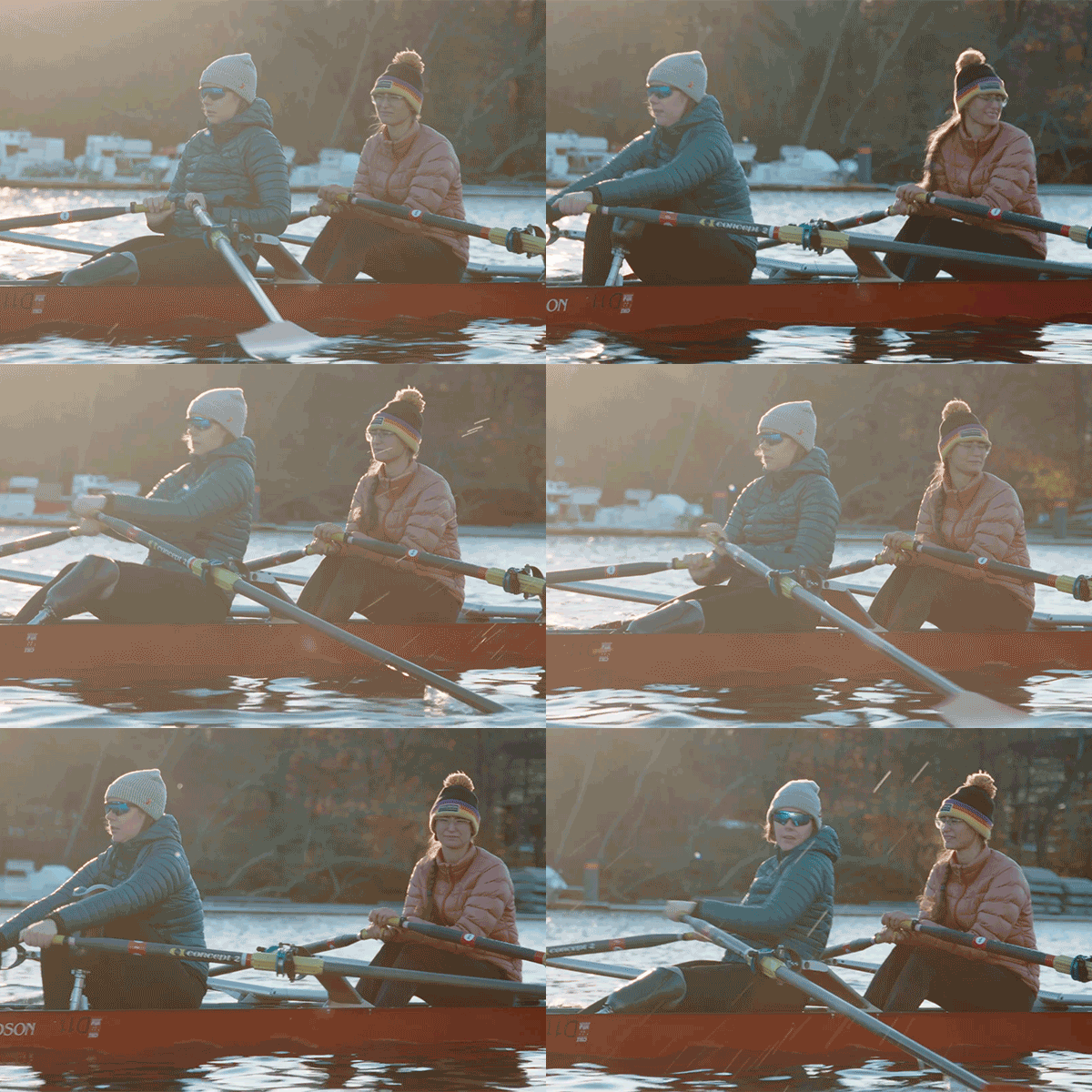
A group of bioengineering undergraduate students came together for their capstone project to develop a custom prosthetic foot and ankle for a para-athlete.
This article originally appeared on Northeastern Global News. It was published by Cesareo Contreras. Main photo: Megan Hopkins, a para-athlete, rows with her CRI Rowing coach Serena Blacklow on the Charles River. Video by Cameron Sleeper/Northeastern University.
Para-athlete regains balance and power with custom prosthesis
Megan Hopkins was gliding on the Charles River, her oars slicing the water as she executed each stroke.
It was some of the best rowing of her career, a testament to the ingenuity of a group of Northeastern University bioengineering students who had developed a prosthetic foot and ankle for the local para-athlete.
“It’s so good,” Hopkins hollered to the group of students trailing on a launch boat as she tested the device.
Where her previous prosthesis made it challenging for her to distribute pressure evenly between her legs and caused some discomfort, this new one was a dream, providing a long range of motion and allowing her to perform powerful strokes with little trouble.
It was a moment of celebration for both Hopkins and the students, who had spent the past few months developing the prosthesis.
“I have the sense that engineering is in my blood,” said Max Sproull, one of six Northeastern undergraduates who designed and manufactured the prosthesis for their bioengineering capstone class.
“I’ve done projects before, but this is a first for me seeing an actual bioengineering project through to completion that’s actually going to be used by a real person,” he added. “It’s really satisfying. We started from nothing.”
That’s the exact feeling the course is designed to invoke, explained Daniel Grindle, a Northeastern University professor of bioengineering and the group’s adviser.
“All throughout their undergraduate degree, we are giving students almost like boutique pieces of important engineering information,” he said. “I teach them mechanics. Someone else teaches them fluids. Someone else teaches cell assays, all this type of stuff. Capstone is one of the few places where we say, ‘You’ve learned all of the pieces of it, you’re going to have to throw it all together because we have a real problem for you to figure out.”
Read full story at Northeastern Global News